
If you’re stuck looking for content ideas that balance professional credibility, thought leadership, and patient education, here are some places to start:
Real Patient Questions from Reddit
“I did not fuse… At all.”
“Hi friends. ACDF C5-6 July 2024. My symptoms have not gone away despite being over a year post op and doing PT, medical massage and pharmacological therapy. I thought I was crazy. I knew there was something wrong but just couldn’t imagine not fusing. Surgeon was concerned that I was not progressing so we got a new MRI and CT. Got the MRI a few weeks before the CT. MRI was perfect. Syrinx hasn’t gotten any bigger and no signs of adjacent segment. Fabulous. Got the CT on Thursday. Surgeon called me last night and said “hey, so, do you want the good news or bad news first?” He said I did not fuse AT ALL. There’s some fibrous tissue growth, but absolutely zero bone growth. There’s a black line on the CT where the new bone growth should be. My surgeon is shocked. He said the screws must be just loose enough to allow for micro-motion. So now, we plan for revision with titanium cage instead of bone cage and rescue screws instead of whatever he used last time. I guess my question is – should I expect the recovery to be any different? Just from the perspective of those who have been through it. What questions should I be asking my surgeon? I am extremely fortunate to have an incredibly compassionate and empathetic surgeon who is very much “on my team” and has bent over backwards to make sure I have everything I need to succeed. I’m open for suggestions, advice, sympathy lol. Thank you all!”
Top Responses:
“There is always a risk of non-fusion (pseudoarthrosis) w these types of surgeries. Certain factors will significantly increase this risk… smoking, osteoporosis, menopause, etc …but sometimes theres no plausible reason, just unlucky. Ask your surgeon about the option of a ‘bone growth stimulator’ after the next surgery, may help increase your chances of solid fusion”
“I was fused L4/L5 360. I do have pretty significant osteoporosis. My surgeon used my bone and cadaver bone and used the bone morphogenetic protein that was mentioned. I was so afraid going into all of this that I wouldn’t fuse but was almost completely fused at 9 months. I feel that it was the BMP that really helped me to fuse along with following all restrictions. Definitely ask about BMP.”
“Ask how much experience they have with revision anterior cervical surgery. Ask if an ENT or he/her is doing the surgical approach. A lot of talk about BMP in the other comments. Yes, helps fusion rates, but also elevated rates of dysphagia/soft tissue complications. I don’t know your other existing medical issues, but will be relevant when considering all options.”
“If you could go back in time, what would you ask your surgeon?”
“So basically i talked my dad into the surgery and we have a check up tomorrow, they’ll do another x-ray and we’ll tell them about the decision but i really want to be so sure about all the choices im making, so i wanted to ask If you could go back in time, what would you ask your surgeon? What is everything that i should ask and question them about? What’s everything that i have to make sure of? Your answers are very much appreciated, tysm! I do not want to have any regrets so this will be really helpful T-T (By the way I haven’t met my surgeon yet and i cant find anything about her online)”
Top Responses:
“What is your plan for managing any post op pain?”
“…But main questions:
- what is the post surgical prognosis for success of the procedures to resolve x issues (be specific for me it was pain) and what will be the long term impact to my mobility/range of motion/ ability to do x (be specific for me it was to continue working my very physically demanding job)
- what is the risk of surgical failure?
- do we anticipate future surgeries to address new problems caused by this intervention?
- what is the post op recovery like? Will there be hospital stay if so how long? What type of help will be needed at home and for how long? Will dad qualify for in home nursing/PT or is that all outpatient?”
“Who will handle questions about recovery? Refill requests? Basically, try to find out what kind of support staff the surgeon has.”
“I did not ask enough questions about the recovery. Like how long it will be and what to expect.”
“…how long the procedure was expected to last, how long would I be required to stay in the hospital, and when can I return to playing golf…”
“Be very careful. Ask about the risk involved.”
“How long will you follow me post up (I hope and expect at least one year). What is the protocol for post op pain management (I needed meds for 3 months due to complications). How many revision surgeries have you done?”
“After ACDF” — How Would You Answer this Question?
“I had surgery almost three weeks ago for ACDF c5,c6. My symptoms after surgery: Dizziness, imbalance, weak limbs, arm numbness and shoulder pain while walking and doing physiotherapy The neurologist also examined me, indeed these symptoms persist. Do you think this is still normal? Is there any chance of improvement? (I can hardly hold my glass at the moment).”
Top Answer they received from another patient:
“I had ACDF c6-7 June 23 and had questions involving similar pain and sensation and asked at my 3 week FU with my surgeon. If you had numbness and weakness beforehand, it could take awhile for everything to feel somewhat normal. Most of my sensation is back, but my index finger is still 100% offline. There’s A LOT of nerves in the spine and injuries to those nerves also affect our muscles, so it’s gonna take time. As far as pain in your shoulder when walking, with ACDF sometimes Drs really have to stretch you out to get the affected disc out and replacements in. I’m still having shoulder pain and this is what my neurosurgeon said is causing it because I had such a large chunk that needed to come out. Give yourself grace. ACDF is a major surgery. While you can be active to a degree, by no means does that mean you should be anywhere close to 100%. It could take months to get back to normal.”
“What did I do now. Something popped?” — How Would You Answer this Question?
“I’m a TLIF an L3 to S1, 5 days ago, and I just felt something pop near the left side of the hips. It didn’t lead to pain or anything. Is this normal?”
Top Answer they received from another patient:
“Happens all of the time. Ligaments and synovial fluid are two common culprits. Yes, it can hurt, but it’s nothing to be concerned about.”
“3 month post-op scar” — How Would You Answer this Question?
“ACDF C4-7 about 3 months ago. How did your scar look around this time? The redness has lessened and it’s flattened considerably, but still a bit concerned with how it’s looking/healing.
On the bright side, it’s been 3 months with working arms and fingers again :)”
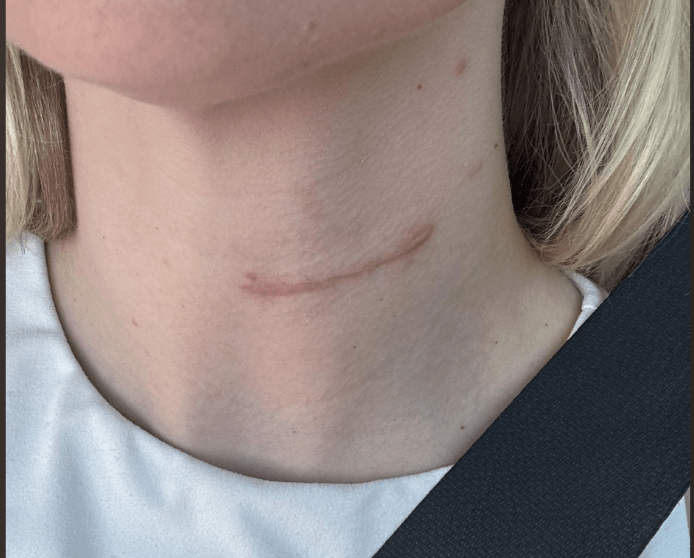
Top Answers they received from other patients:
“I have that same scar and I’m 9 months out and it is barely noticeable now. It was red for a few months but gradually lightened up.”
“It looks great for 3 months. Keep it out of the sun. The pinkness will slowly start to go away. I’m 8 months out from same surgery and everyone tells me that they don’t see it. We just know it’s there.”
“Keep it out of the sun. I did that by buying super SPF lip balm and using it on the scar.”
Blog Ideas
Click on the titles below to read articles that can help you craft a blog post:
Thought Leadership & Insights
- “One thing I wish patients knew before spine surgery…” (Share a brief, digestible insight)
- “Here’s what’s changing in spine care in 2025” (A mini industry trend update)
- Case reflection (HIPAA-compliant): “A recent case reminded me how important ___ is when making surgical decisions.”
- Your take on a recent spine journal article: “Just read this in Spine Journal — here’s my 60-second summary and why it matters.”
- Ask your network: “How do you approach [e.g., adjacent segment disease] in your practice?” (Encourage engagement with peers)
Patient Education & Myth Busting
- Common misconceptions: “No, back pain does not always mean surgery is the answer.”
- Quick explainer: “What is spinal stenosis? Here’s how I explain it to patients in clinic.”
- Rehab reminders: “What patients do after surgery matters just as much as what happens in the OR.”
- Imaging insights: “An MRI isn’t always the final word—here’s what we also consider.”
Practice & Team Spotlights
- Shout out OR or clinic team: “Grateful for my team this week—surgical success is never a solo effort.”
- Behind-the-scenes: “Here’s a look at how we prepare for complex spinal cases.”
- Clinic milestone or new offering: “We’re now offering [e.g., motion-preserving surgery evaluations] in our practice.”
Mentorship & Giving Back
- Mentor appreciation: “This surgeon shaped the way I think about patient care—thank you Dr. ___.”
- Teaching moments: “Shared a cadaver lab with residents this weekend—nothing better than seeing those ‘aha’ moments.”
- Volunteer work: “Just wrapped up a week of global outreach surgery in [location]—here’s what I learned.”
Patient-Friendly Education
- “Spine Myth Monday”: Bust a common misconception (e.g., “All back pain needs surgery?”)
- Anatomy basics with annotated visuals or models (e.g., “Here’s your L5-S1 explained in plain English”)
- Rehab reminders: Post-op do’s and don’ts
- Imaging insights: “This MRI told me more than just what hurts”
Behind the Scenes
- OR prep (HIPAA-safe): Gloved hands, instrumentation tray, or the team pre-op
- Clinic day story: A quick 3-frame sequence: whiteboard notes, spine model, and shoes
- Conference moments: Selfies with peers, booth visits, or quick takeaways
Get to Know the Surgeon
- “Why I chose spine surgery”
- Childhood photo + caption: “The journey from here to spine ORs”
- “3 things I do outside the OR to decompress”
Professional Credibility
- Journal article commentary: Post the title/cover, add your 2-sentence POV
- Surgical innovation demo: Show a minimally invasive tool or model, not the patient
- Presentation snapshot: At a podium, mid-talk, or quote slide
- “Honored to be part of this research” with tag to collaborators
Interactive & Shareable
- Polls or quizzes in Stories (e.g., “What’s more common after 50: disc herniation or spinal stenosis?”)
- “Ask me anything about spine health” story prompt
- Countdown timer: “Next week I’m covering robotics in spine—set a reminder!”
 The Brit Factor