
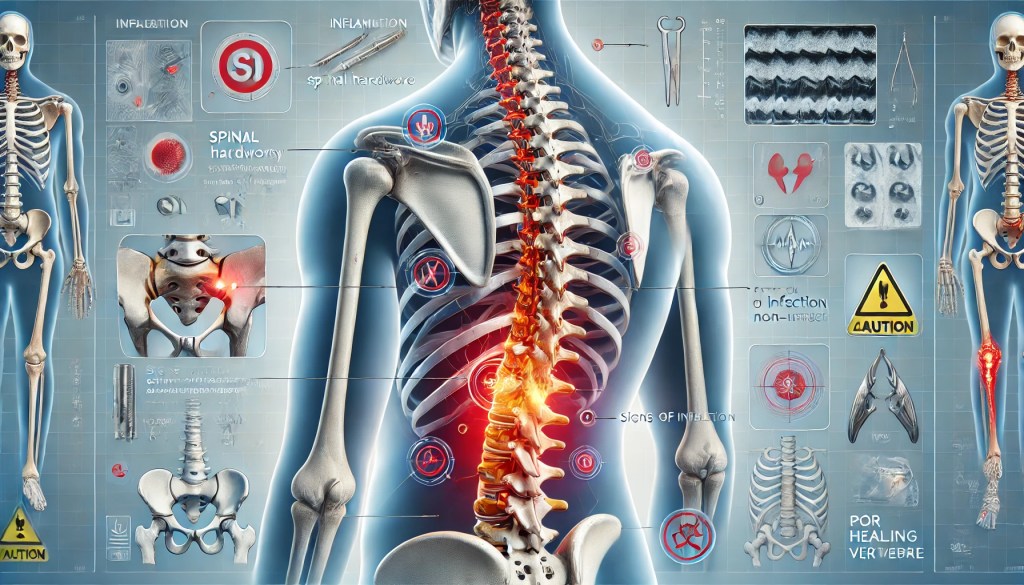
A recent article by the Cleveland Clinic cited two recent systematic reviews and meta-analyses—encompassing data from over 180,000 patients—that highlight elevated rates of nonunion and less favorable patient-reported outcomes among individuals with these conditions undergoing spinal fusion surgery. [1]
Population data from the CDC shows that for 23 states in 2023, more than one in three adults (35%) had obesity (BMI ≥ 30). In general, at least one in five adults (20%) in the US is living with obesity. [2] In 2021, 38.4 million Americans, or 11.6% of the population, had diabetes. Of the 38.4 million adults with diabetes, 29.7 million were diagnosed, and 8.7 million were undiagnosed. [3]
Nearly 80% of U.S. lumbar fusion patients have obesity, and with diabetes prevalence among spinal surgery patients currently ranging from 15% to 25%, projections show a 35% increase by 2045. [2]
Why these comorbidities?
Diabetes and obesity are under increased scrutiny for their role in compromising spinal fusion outcomes, due to their systemic effects on bone healing and recovery. Past studies have offered limited or inconsistent evidence, prompting a new effort to clarify their impact. Diabetes may impair fusion through poor blood flow, metabolic disruption, and reduced bone formation, while obesity adds mechanical stress, nutrient deficiencies, and inflammatory effects. Both conditions are also linked to chronic pain and slower recovery, which can negatively influence fusion success and patient-reported outcomes.
Study Design
Two systematic reviews and meta-analyses, conducted under PRISMA guidelines, examined how diabetes and obesity affect spinal fusion outcomes. Comprehensive searches across multiple databases included only comparative studies.
- Diabetes Study: 18 studies were analyzed with 118,617 spine fusion patients. Compared those with and without diabetes in terms of nonunion rates and patient-reported outcomes (PROMs), including pain and disability scores (VAS, ODI, EQ-5D, SF-12/36).
- Obesity Study: Included 15 studies with 61,341 lumbar fusion patients. Compared outcomes between obese (BMI ≥ 30) and non-obese individuals, focusing on nonunion rates, PROMs, and healthcare costs.
Findings
Diabetes and Spinal Fusion Outcomes: A meta-analysis of 18 studies involving 118,617 patients found that diabetes is associated with poorer outcomes after spinal fusion:
- Increased Risk of Nonunion: Diabetic patients had a 13% higher chance of fusion failure compared to those without diabetes. (OR 1.13; p < 0.05).
- Greater Pain: Higher back and neck pain scores were reported on the VAS scale (SMD 0.21; p < 0.001). While the difference was small, it was consistent enough across studies to be considered meaningful and not due to chance.
- Worse Functional and Quality-of-Life Outcomes:
- ODI: Higher disability scores (MD 3.96; p < 0.001)
- EQ-5D: Lower health utility scores (MD -0.06; p < 0.001)
- SF-12/36: Significantly worse quality-of-life scores (SMD -2.70; p < 0.05) [4]
Obesity and Lumbar Spinal Fusion Outcomes: A meta-analysis of 15 studies involving 61,341 patients found that obesity (BMI ≥ 30) is significantly linked to worse outcomes after lumbar spinal fusion:
- Higher Nonunion Rates: Obese patients had more than double the odds of spinal nonunion (OR 2.10; p < 0.01).
- Worse Disability Scores: Oswestry Disability Index (ODI) scores were significantly worse in the obesity group (mean difference 6.29; p < 0.001).
- Increased Pain: Patients with obesity reported more back and leg pain on VAS scales (MD ~0.95; p < 0.05 and p < 0.001, respectively).
- Lower Quality of Life: SF-12/36 scores were significantly lower (SMD -0.46; p = 0.01), indicating poorer health-related quality of life.
- Higher Hospitalization Costs: Obesity was associated with significantly greater healthcare costs (SMD 0.09; p < 0.001). [5]
References
[1] Clinic, C. (2025, July 22). Diabetes and obesity are red flags for spinal fusion complications. Cleveland Clinic. https://consultqd.clevelandclinic.org/diabetes-obesity-spinal-fusion-complications
[2] New CDC data show adult obesity prevalence remains high. (2024, Sept 12). CDC Newsroom. https://www.cdc.gov/media/releases/2024/p0912-adult-obesity.html
[3] Diabetes in America: prevalence, statistics, and economic impact. (n.d.). https://diabetes.org/about-diabetes/statistics/about-diabetes#:~:text=Overall%20numbers,5%2C300%20with%20type%202%20diabetes.
[4] Steinmetz, M. P., O’Toole, J. E., Harrop, J. S., Mariscal, G., Chaput, C. D., Arnold, P. M., Jacobs, W. B., Witiw, C. D., & Sasso, R. C. (2025). Adverse Impact of Diabetes on spine Fusion and Patient-Reported Outcomes. Spine. https://doi.org/10.1097/brs.0000000000005396
[5] O’Toole, J. E., Sasso, R. C., Harrop, J. S., Mariscal, G., ChapuT, C. D., Arnold, P. M., Witiw, C. D., Jacobs, W. B., & Steinmetz, M. P. (2025). Adverse Impact of Obesity on Lumbar Spine Fusion, Patient-Reported Outcomes and Costs. Spine. https://doi.org/10.1097/brs.0000000000005395
 The Brit Factor
Leave a comment