
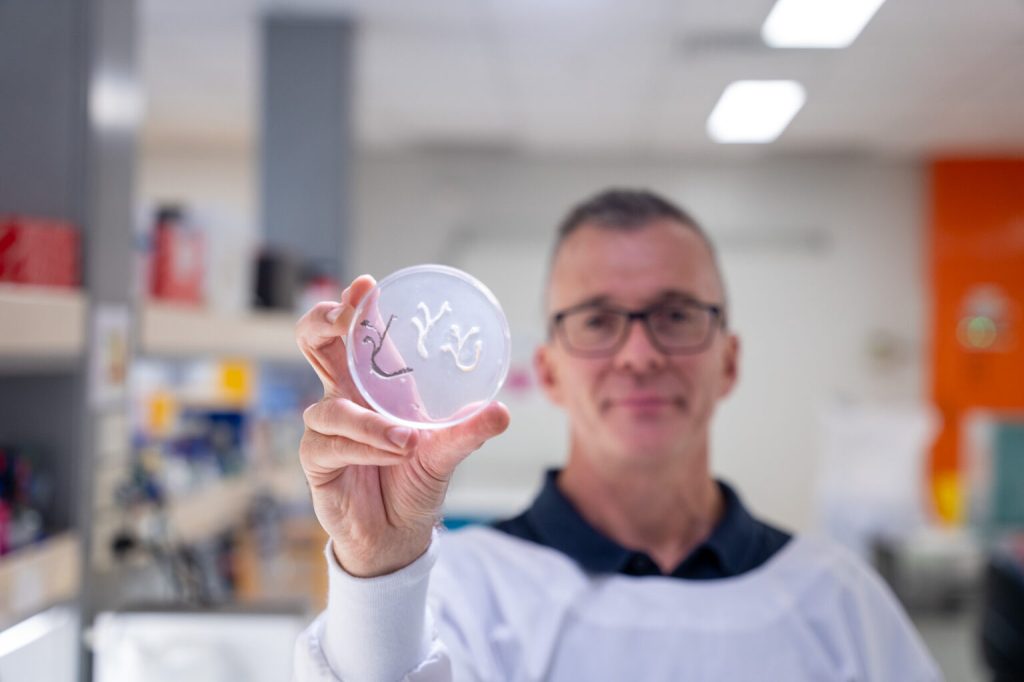
A groundbreaking clinical trial aimed at revolutionizing spinal cord injury treatment has been announced. The trial combines nerve bridge therapy, using olfactory ensheathing cells, with patient-centered rehabilitation to restore independence for those affected by spinal cord injuries.
Earlier…
Spinal cord injury (SCI) has far-reaching effects beyond the loss of the ability to walk, affecting multiple aspects of life. Paralysis not only impacts motor and sensory functions, leading to loss of movement and sensation, but also disrupts autonomic functions, such as bowel, bladder, and sexual control. Additionally, the psychological and social impacts are significant, as individuals with SCI often experience depression, loss of independence, and reduced participation in employment and education, all of which compound the challenges of living with such a condition.[2]
Professor James St John and his team at Griffith University’s Clem Jones Centre for Neurobiology and Stem Cell Research are preparing for a human Phase I/IIA clinical trial in Queensland, Australia, aimed at treating spinal cord injury. Their research focuses on olfactory ensheathing cells (OECs), which are derived from the patient’s own nose. These cells protect and repair the olfactory nerve and possess regenerative properties that are beneficial for spinal cord repair. The team has developed a three-dimensional nerve bridge composed of OECs, which will be transplanted into the spinal cord injury site with the goal of restoring motor, sensory, and autonomic functions. This innovative therapy is paired with an intensive rehabilitation program to maximize recovery potential. Previous pilot trials have demonstrated improvements in both physical and psychological health among participants, providing hope for future success.[2]
“For too long there has been no hope for people, and now this incredible team of medical researchers are starting to make changes that we’ve never seen before.”
-Perry Cross AM, Perry Cross Spinal Research Foundation.
The global burden of spinal cord injuries is immense, with around 20 million people affected worldwide. In Australia, the economic cost is staggering, with the lifetime cost for someone with quadriplegia estimated at $9 million, and the total societal cost of spinal cord injuries exceeding $3 billion annually. Beyond spinal cord injuries, the nerve bridge technology developed by Professor St John and his team holds promise for a wider range of nervous system injuries, including peripheral nerve and brain injuries, expanding the potential impact of this groundbreaking research.[2]
Olfactory ensheathing cells (OECs)
Olfactory ensheathing cells (OECs) are special cells that help regenerate the olfactory nerve, which is responsible for our sense of smell, throughout a mammal’s life. Over ten years of research suggests that implanting these cells could be a promising treatment for nervous system damage, including spinal cord injuries. Based on this, several clinical trials have begun around the world, using a patient’s own olfactory tissue, which contains OECs, to treat spinal cord damage.[3]
Now…
Following the passing of Professor Emeritus Alan Mackay-Sim in 2023, his pioneering research on spinal cord injury is moving forward with a Phase I clinical trial. Led by Professor James St John at Griffith University, the study integrates OEC transplantation with intensive rehabilitation, offering new hope for the 20,000 Australians living with spinal cord injuries.[4]
The cells will be harvested from the patient’s nose, purified, and transformed into specialized nerve bridges to be implanted into the injured spinal cord. Intensive rehabilitation for up to a year will reinforce the regenerative process. While past trials faced challenges, recent advances in cell purification and nerve bridge design, developed by St John’s team, aim to overcome these obstacles. Preclinical research and pilot rehab trials have shown positive results, laying a strong foundation for this clinical trial.[4]
Philanthropic support has been crucial to this project, with major contributions from the Clem Jones Foundation, the Perry Cross Spinal Research Foundation, and the Motor Accident Insurance Commission (MAIC). The trial seeks volunteers with chronic spinal cord injuries and is expected to have a significant impact on both the participants’ lives and the future of spinal cord injury treatment.[4]
References
[1] Sarah, & Sarah. (2024, October 22). World-first clinical trial for treating spinal cord injury – Gold Coast Health & Knowledge Precinct. Gold Coast Health & Knowledge Precinct – Transform with us. https://gchkp.com.au/world-first-clinical-trial-for-treating-spinal-cord-injury/
[2] Butler, N. (n.d.). Building bridges to restore spinal function. Retrieved October 22, 2024, from https://www.griffith.edu.au/research/impact/world-first-restore-spinal-function
[3] Boyd, J. G., Doucette, R., & Kawaja, M. D. (2005). Defining the role of olfactory ensheathing cells in facilitating axon remyelination following damage to the spinal cord. FASEB journal : official publication of the Federation of American Societies for Experimental Biology, 19(7), 694–703. https://doi.org/10.1096/fj.04-2833rev
[4] O’Connor, E. (2024, October 20). World-first clinical trial for treating spinal cord injury. Griffith News. https://news.griffith.edu.au/2024/10/21/world-first-clinical-trial-for-treating-spinal-cord-injury/
IMAGE — Nerve bridges made from olfactory ensheathing cells which replicate a nerve obtained from a chicken, featuring Professor James St John https://news.griffith.edu.au/2024/10/21/world-first-clinical-trial-for-treating-spinal-cord-injury/
 The Brit Factor
Leave a comment