
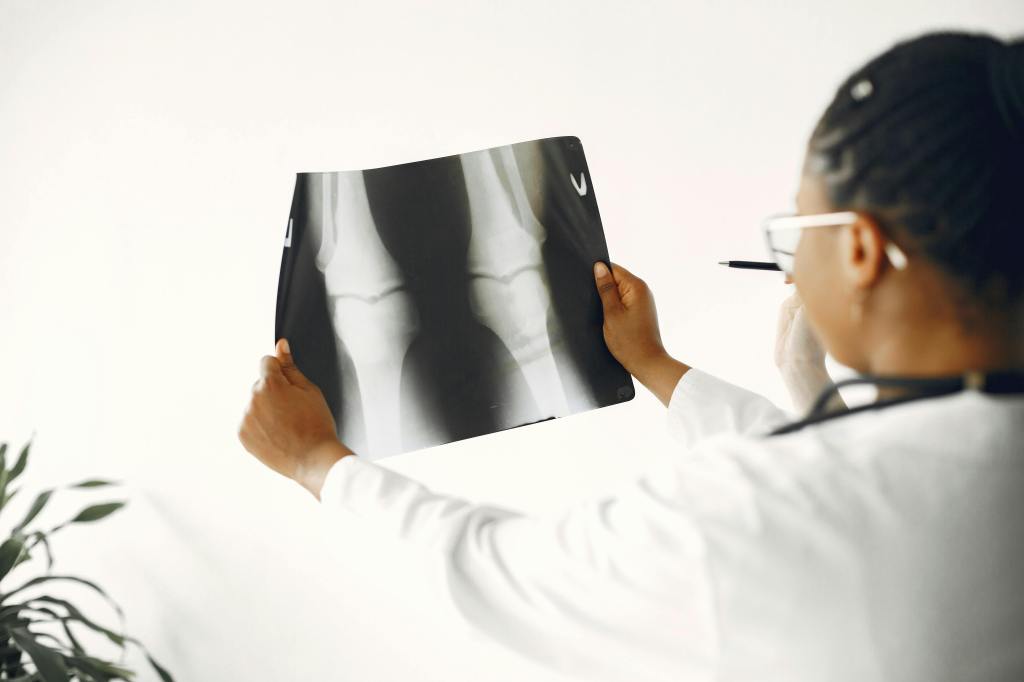
Six orthopedic surgeons connected with Becker’s to answer, “What technologies do you believe have the potential to change orthopedics?” [1]
Nitin Bhatia, MD. Orthopedic Surgeon at UCI Health (Orange, Calif.):
- Regenerative medicine has the potential to repair and restore body functions, not just address injuries.
- Artificial intelligence (AI) is showing promise in analyzing images, managing medical records, and even predicting surgical outcomes.Despite its power, AI is a tool that relies heavily on the expertise of the surgeon using it.
Hafiz Kassam, MD. Shoulder and Elbow Surgeon at Hoag Orthopedic Institute (Irvine, Calif.):
- Revolutionizing Surgery:
- Robotics: Increased precision and control for implant placement, enabling minimally invasive techniques and potentially faster recovery.
- Enhanced Reality (AR): Overlays digital information for better decision-making and improved surgical accuracy.
- Transforming Surgeon Education:
- AR: Visualizes anatomy in 3D and allows for interactive learning in a controlled environment.
- Virtual Reality (VR): Provides simulations for practicing surgical techniques and decision-making.
- Global Impact:
- These technologies can bridge resource gaps and bring quality orthopedic education to under-served areas.
Earl Kilbride, MD. Orthopedic Surgeon at Austin (Texas) Orthopedic Institute:
- Big data combined with AI algorithms is revolutionizing orthopedics.
- Implant companies are using this tech to predict patient outcomes based on data input.
- This technology is expected to keep improving and lead to better patient outcomes.
Philip Louie, MD. Spine Surgeon at Virginia Mason Franciscan Health (Tacoma, Wash.):
- All-in-one platforms: Combining pre-surgical planning, augmented reality, surgical robotic assistance, and post-operative outcome tracking. This could potentially guide surgeons throughout the entire surgery process and provide valuable data for future procedures.
- Mixed reality platforms: Allowing surgeons to interact with digital information during surgery. This could enhance safety and communication within the operating room by enabling real-time data review and information sharing. Additionally, these platforms can be used for staff training.
- 3D depth-perception cameras: Providing clear visualization through small surgical openings at various depths. This could improve ergonomics for surgeons and potentially reduce injuries caused by awkward positioning during minimally invasive procedures.
John Shin, MD. Orthopedic Spinal Surgeon at RWJBarnabas Health Medical Group (Livingston, N.J.):
- Unilateral biportal endoscopic spine surgery is a new minimally invasive approach for treating degenerative spinal conditions in adults.
- Benefits include:
- Faster recovery
- Reduced blood loss
- Lower infection risk
- Preservation of native soft tissues (compared to traditional open spine surgery)
Anand Srinivasan, MD. Director of Anterior Hip Replacement Program at Endeavor Health Orthopaedic & Spine Institute (Gurnee, Glenview and Lincolnshire, Ill.):
- Ambient documentation: AI tech in outpatient settings that automatically summarizes patient encounters, potentially replacing scribes or physician assistants for documentation tasks.
- Augmented reality (AR) in surgery: Overlays from implant companies to assist surgeons during procedures, potentially improving accuracy and efficiency.
References:
[1] Hatton, R. (2024, March 15). The technologies that can change orthopedics. https://www.beckersspine.com/orthopedic/59196-the-technologies-that-can-change-orthopedics.html
Photo by Gustavo Fring: https://www.pexels.com/photo/doctor-looking-at-xray-7446985/
 The Brit Factor
Leave a comment