
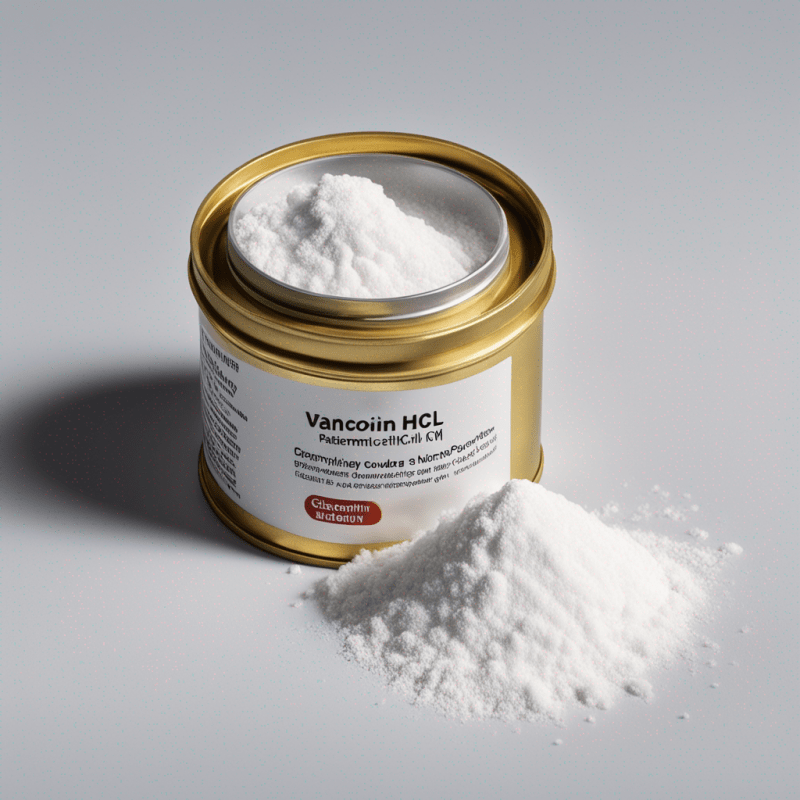
Before I delve into what I’ve learned about vancomycin over the past few days, let me start with a summary of what vancomycin is. (Other than, if you’re like me, “How do you say that??”)
Vancomycin (vang·kuh·mai·sn) [5]
- Indications:
- FDA-approved: various infections caused by Gram-positive bacteria (e.g., MRSA, Staphylococcus aureus)
- Off-label: surgical-site infections, catheter-related infections, pneumonia, C. Diff infections, etc.
- Mechanism of action: inhibits bacterial cell wall synthesis.
- Administration: intravenous or oral (depending on the infection).
- Adverse effects:
- Intravenous: nephrotoxicity, hypotension, hypersensitivity reactions (including VFS)
- Oral: gastrointestinal issues, taste disturbances
- Contraindications: known hypersensitivity to vancomycin.
- Important considerations:
- Monitor renal function and blood cell counts during therapy.
- Monitor vancomycin levels in specific situations (e.g., severe infections, renal impairment).
- Be aware of the potential for drug interactions.
- Vancomycin use should be guided by antimicrobial stewardship principles to minimize resistance.
The paper that caught my eye was “Efficacy of Vancomycin Powder for Preventing Postoperative Spinal Infection: The experience of routine use of vancomycin powder (VP) for four years.” [1] (Please note, this article was in a journal “pre-proof,” which was marked all over it). But I also decided to look up a few other papers [2, 3, 4] to get a better idea for further investigations into vancomycin powder and maybe where the use of SSIs started (considering that’s an off-label indication, according to StatPearls.) [5]
Spine surgery patients often get surgical site infections (SSIs), which are expensive and can make them very sick or even die. These infections are commonly caused by Staphylococcus aureus bacteria. Even though doctors try to prevent them, SSIs still happen in up to 15% of spine surgery cases. [2] The potential benefits of vancomycin powder include reduced risk of these SSIs and safety based on rare side effects. [3]
Based on early evidence from a study to determine if the use of intrawound powder reduces SSIs after open reduction and internal fixation of the bicondylar tibial plateau, tibial pilon, and calcaneus fractures, it found [4]:
- Vancomycin powder linked to lower infection rates in the control group of fractures:
- 0% infection rate with the powder vs. 10.6% without (significant difference).
- Reduced deep-site infection compared to historical data:
- There is a 0% infection rate with powder vs. a historical 13% rate (significant difference).
- Similar findings in different analyses:
- All analyses showed lower infection rates in the vancomycin powder group.
The study concluded that vancomycin powder may lower surgical-site infection rates after fracture fixation; a larger randomized controlled trial is needed to validate the findings.
In 2 meta-analyses of clinical evidence explicitly focused on SSIs after spine surgery, while the findings are not conclusive, they suggest:
- Reduced risk of SSIs:
- Several studies, mainly level III evidence, show a potential decrease in SSIs, particularly deep infections, with vancomycin powder use. [2]
- Compared to the control group, vancomycin powder significantly reduced surgical site infection rates (6.54% vs. 1.96%). This finding aligns with previous studies and suggests a potential benefit for high-risk patients or hospitals with frequent infections.[3]
- Risk factors:
- The study identified several infection risk factors, including advanced age, prolonged surgery, high body mass index, high ASA score, and significant blood loss. These are consistent with previous literature. [3]
- Safety:
- Studies suggest vancomycin powder is likely safe, with rare reports of severe side effects.[2]
- No significant adverse effects related to vancomycin powder were observed. [3]
- Cost-effectiveness:
- Local vancomycin powder application is cost-effective due to its low cost and potential to prevent expensive re-operations for infections. [3]
- Limitations:
- High-quality studies (level II) have shown no significant difference in infection rates with vancomycin powder. [2] (i.e., conflicting results for this study)
- Studies used different types of surgeries, patient characteristics, and methods, making comparisons difficult. [2]
- Studies used varying definitions for SSIs and protocols, hindering clear conclusions. [2]
- The study was retrospective and had a relatively small sample size. [3]
- It lacked data on pediatric patients. [3]
So, did this study from 2024 (aka from now) tell us anything new? Here are the key takeaways:
- No significant difference in infection rates: The use of VP did not lead to a statistically lower infection rate compared to no VP use.
- No increased complications: VP use did not cause any severe side effects or increase the presence of antibiotic-resistant organisms.
- Safety of VP: VP appears safe for use in spinal fusion surgery.
- Decision on VP use: Individual doctors should make the decision to use VP due to the lack of conclusive evidence on its effectiveness in preventing infections.
- Need for further research: Larger and more robust studies are needed to determine VP’s effectiveness in preventing infections after spinal fusion surgery.
No, there is no new information. However, it is essential to keep pulling the thread of this sweater (Weezer fans, anyone?) because each of these studies cannot reject the proposed hypothesis that vancomycin powder can reduce SSIs. Until science can reject this possibility altogether, vancomycin powder’s potential safety, cost-effectiveness, and efficacy is worth the investigation.
References
[1] Sung-Woo Choi, Jin Yeong Hwang, Min Jung Baek, Jae Chul Lee, Hae-Dong Jang, Jae-Hyun Kim, Byung Joon Shin. (2024) Efficacy of Vancomycin Powder for Preventing Postoperative Spinal Infection: The experience of routine use of vancomycin powder for four-year. Clinical Neurology and Neurosurgery. https://doi.org/10.1016/j.clineuro.2024.108222
[2] Bakhsheshian, J., Dahdaleh, N. S., Lam, S. K., Savage, J. W., & Smith, Z. A. (2015). The use of vancomycin powder in modern spine surgery: systematic review and meta-analysis of the clinical evidence. World neurosurgery, 83(5), 816–823. https://doi.org/10.1016/j.wneu.2014.12.033
[3] Oktay, K., Özsoy, K. M., Çetinalp, N. E., Erman, T., & Güzel, A. (2021). Efficacy of prophylactic application of vancomycin powder in preventing surgical site infections after instrumented spinal surgery: A retrospective analysis of patients with high-risk conditions. Acta orthopaedica et traumatologica turcica, 55(1), 48–52. https://doi.org/10.5152/j.aott.2021.18372
[4] Qadir, Rabah MDa; Costales, Timothy MDa; Coale, Max BAa; Mulliken, Alexandra BSa; Zerhusen, Timothy Jr BSa; Joshi, Manjari MBBSb; Castillo, Renan C. PhDc; Carlini, Anthony R. MSc; O’Toole, Robert V. MDa. Vancomycin Powder Use in Fractures at High Risk of Surgical Site Infection. Journal of Orthopaedic Trauma 35(1):p 23-28, January 2021. | DOI: 10.1097/BOT.0000000000001863
[5] Patel, S., Preuss, C. V., & Bernice, F. (2023, March 24). Vancomycin. StatPearls – NCBI Bookshelf. https://www.ncbi.nlm.nih.gov/books/NBK459263/
IMAGE — Premium Vancomycin HCL Antibiotic Powder for effective bacterial infection Treatment (CAS 1404-93-9). (n.d.). Procurenet Limited. https://procure-net.com/product/vancomycin-hcl-7/
 The Brit Factor
Leave a comment