
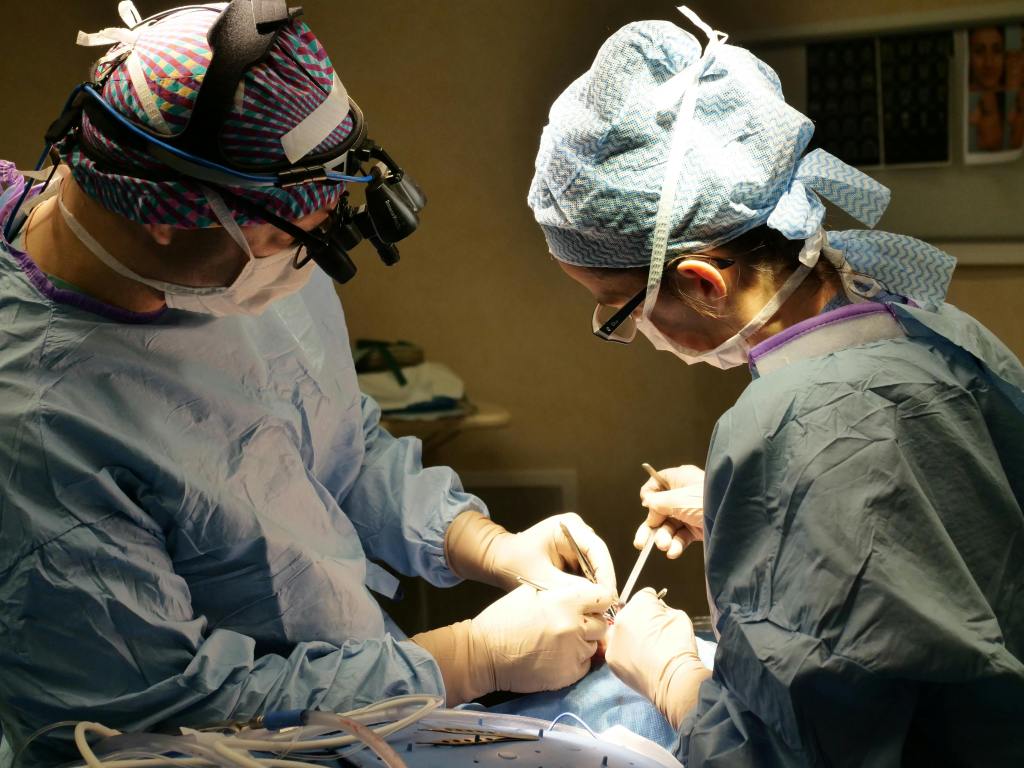
If you’re like me, just hearing about being awake during surgery, let alone spine surgery, sends shivers down my…well…spine. A multicenter United States Study found that 0.13% of patients (or 1-2 per 1000 interviewed) experienced awareness during surgery. Looking at the larger scale, they estimate about 26,000 cases of “anesthesia awareness” occur annually in the U.S. [1]. However, what’s all of this about surgery where you’re intentionally supposed to be awake?
Sparking my interest in this topic was the recent announcement of “Vail physician performs first awake spine surgery in Nepal.” I had heard of Awake Spine Surgery before and assumed I knew it at a fundamental and shallow level. I was wrong, so I wanted to share what I learned.
Awake spine surgery is when the patient is awake during the procedure and can be performed using regional anesthesia, which numbs the area of the body being operated on. This allows the patient to move and respond to questions from the surgeon, which can help to ensure that the surgery is performed accurately and safely.[4]
The benefits of awake spine surgery include:
- Patient comfort: Awake surgery allows communication with patients for comfort and safety. Music of their choice is played during the procedure. [2]
- Reduced risk of complications: Because the patient is awake, they can report any pain or discomfort immediately, which can help to prevent complications such as nerve damage. Compared to general anesthesia, spinal anesthesia reduces risks like memory loss, nausea, and cognitive impairment, especially in older patients. [2,3,4,6,7]
- In a study specifically focused on lumbar surgery in older patients [8]:
- Awake patients had significantly lower complication rates (14.0%) than general anesthesia (25.3%).
- Specific complications in awake patients: most frequent were nausea/vomiting (7.9%), urinary retention (4.4%), spinal headache (0.5%), and conversion to GA (0.4%).
- Specific complications in general anesthesia patients: most frequent were nausea/vomiting (17.5%) and urinary retention (8.6%).
- The pooled rate of postoperative spinal headaches was 2%.
- In a study specifically focused on lumbar surgery in older patients [8]:
- Faster recovery times: Spinal anesthesia leads to shorter surgery time, lower post-surgery pain, and faster ability to walk (7.8 hours earlier) than those who undergo traditional (general anesthesia) surgery. [2,3,4]
- Improved outcomes: Awake spine surgery has been shown to improve outcomes for some patients, such as those with spinal stenosis. [3,4,6]
- Reduced hospital stay: shorter surgery time and faster recovery lead to less time spent in the hospital. [3,6,7]
The limitations of awake spine surgery include the following:
- Not suitable for all patients: Awake spine surgery is not suitable for all patients, like those with sleep apnea or high BMI or those who are anxious or have medical conditions that make it difficult for them to stay awake during surgery. [2,4,6] Requires careful selection based on health, anxiety levels, and ability to tolerate the procedure while awake.[6]
- The anesthesia duration limits the procedure to one or two-level fusions.[2]
- Can be more expensive: Awake spine surgery can be more costly than traditional surgery due to the additional costs of monitoring the patient and providing regional anesthesia. [4] (however, I did find mention that awake spine surgery can lower costs, which I assume can stem from less hospital stay and, therefore, fewer post-surgery resources for the hospital. So, this might make it a wash, but I can’t be sure.)
- Ongoing research: Long-term effectiveness and optimal indications are still being researched. [6,7]
- Limited scope: Mainly focused on thoracolumbar surgeries, applicability to other spinal regions needs evaluation.[7]
Commonly performed awake spine surgery procedures are: [3]
- Laminectomy/discectomy
- Anterior cervical discectomy and fusion (ACDF)
- Lumbar fusion
- Dorsal column (D.C.) stimulator placement
So, what does this mean for the future of awake spine surgery?
Becker’s Carly Behm was able to catch up with the “Vail physician” mentioned in the article I stated at the top of the post, Ernest Braxton, MD., and other surgeons currently practicing awake spine surgery.
“In the next five years, I expect awake spine surgery to become more standardized and widely adopted among minimally invasive spine surgeons. Advances in regional anesthesia techniques and monitoring technology will likely further enhance its safety and effectiveness. Additionally, as more data on outcomes and patient experiences become available, surgeons will have a better understanding of the indications and limitations of awake spine surgery, leading to improved patient selection and surgical planning.”
Ernest Braxton, MD [9]
“In five years, I believe there will be greater adoption of awake spine surgery, driven by patients asking for the technique. As more data gets presented and published patients will appreciate the rapid recovery that you can achieve when you avoid general anesthesia. In addition, the cost savings of awake spine surgery will enable more of these cases to be completed in an ASC.”
Alok Sharan, MD. [9]
“Today, awake lumbar fusions are becoming increasingly prevalent in the United States as the techniques have been standardized. Enabling this in my practice has resulted from standardization of our protocols, working closely with the anesthesia team to optimize the anesthetic regimen, and getting the surgical timing down to a science – under three hours skin to skin for any surgery being done awake. My team has been crucial in ensuring that this process is seamless. I use navigation and percutaneous fixation for my awake spinal fusion procedures. We will likely see the complexity of surgeries increase in the coming years, just as we have in the past. I intend to add multilevel lumbar fusions and lateral lumbar approaches to my awake practice in the coming years. I look forward to sharing best practices with other surgeons who are also innovating in this space.”
Vijay Yanamadala, MD. [9]
References
[1] Sebel, Peter S. MB, BS, PhD, MBA*; Bowdle, T. Andrew MD, PhD†; Ghoneim, Mohamed M. MD‡; Rampil, Ira J. MD§; Padilla, Roger E. MD||; Gan, Tong Joo MB, BS, FRCA, FFARCSI; Domino, Karen B. MD, MPH#. The Incidence of Awareness During Anesthesia: A Multicenter United States Study. Anesthesia & Analgesia 99(3):p 833-839, September 2004. | DOI: 10.1213/01.ANE.0000130261.90896.6C
[2] Awake spinal surgery: A paradigm shift in neurosurgery – Mayo Clinic. (2022, April 22). https://www.mayoclinic.org/medical-professionals/neurology-neurosurgery/news/awake-spinal-surgery-a-paradigm-shift-in-neurosurgery/mac-20531255
[3] Stay awake during spine surgery to recuperate faster, go home sooner. (n.d.). Duke Health. https://www.dukehealth.org/blog/stay-awake-during-spine-surgery-recuperate-faster-go-home-sooner
[4] Fiani, B., Reardon, T., Selvage, J., Dahan, A., El-Farra, M. H., Endres, P., Taka, T., Suliman, Y., & Rose, A. (2021). Awake spine surgery: An eye-opening movement. Surgical neurology international, 12, 222. https://doi.org/10.25259/SNI_153_2021
[5] Duke Health. (2023, May 4). Awake spine surgery opens doors to more patients | Duke Health [Video]. YouTube. https://www.youtube.com/watch?v=b0CPMhZZTR0
[6] Stiepan, D. (2023, September 14). Mayo Clinic Minute: How awake spinal surgery benefits patients. Mayo Clinic News Network. https://newsnetwork.mayoclinic.org/discussion/mayo-clinic-minute-how-awake-spinal-surgery-benefits-patients/
[7] Perez-Roman, R. J., Govindarajan, V., Bryant, J., & Wang, M. Y. (2021). Spinal anesthesia in awake surgical procedures of the lumbar spine: a systematic review and meta-analysis of 3709 patients. Neurosurgical Focus, 51(6), E7. https://doi.org/10.3171/2021.9.focus21464
[8] Rajjoub, R., Ghaith, A.K., El-Hajj, V.G. et al. Comparative outcomes of awake spine surgery under spinal versus general anesthesia: a comprehensive systematic review and meta-analysis. Eur Spine J (2023). https://doi.org/10.1007/s00586-023-08071-y
[9] Behm, C. (2024, February 21). What’s the future of awake spine surgery? Becker’s Spine Review. https://www.beckersspine.com/featured-insights/58983-whats-the-future-of-awake-spine-surgery.html
IMAGE – Photo by Olivier Gerbault: https://www.pexels.com/photo/two-doctors-during-a-surgery-15525140/
 The Brit Factor
Leave a comment